Hard water has a way of quietly becoming part of everyday life. At first, you might not notice much. Then the glasses start coming out of the dishwasher with white spots. The shower door needs constant cleaning, towels feel a little rough, and there’s always that stubborn layer of buildup around the faucets.
You can scrub it, buy another cleaning product, or pretend it’s not bothering you. Most homeowners do at least one of those things before eventually asking a more useful question: is the water itself causing the problem?
Connected station The Right Water Dispenser Can Make Everyday Hydration Simpler
For many households, the answer may lead to a water softening system. But choosing one isn’t as simple as picking the largest tank or the model with the most impressive-looking features. The right softener depends on your water conditions, the size of your household, available space, and how much water everyone actually uses.
A family of six with three bathrooms has very different needs from a couple living in a compact home. That may sound obvious, but it’s surprising how often people buy equipment without considering how it will fit into their real lives.
Connected station Why Better Water Quality Can Make a Real Difference at Home
Start by Understanding Your Water
Before choosing any water treatment equipment, it helps to know what you’re dealing with.
Hardness is generally associated with minerals such as calcium and magnesium in the water. These minerals can contribute to scale buildup and other common household frustrations. But hardness isn’t the only characteristic that may matter.
Connected station How Multi-Stage Water Filtration Works to Improve Everyday Drinking Water
Some homes have concerns about sediment, iron, odor, taste, or other water conditions. A softener designed to address hardness may not automatically solve every water-related issue in the house.
That’s why testing or evaluating the water can be a smart first step. It provides a clearer picture and helps prevent the classic “buy first, figure it out later” approach.
Connected station What Your Water Leaves Behind Can Tell You a Lot
Once you understand the problem, choosing equipment becomes much less confusing.
The Right Size Is More Important Than the Biggest Size
When people shop for water softeners, they sometimes assume a bigger unit must be better. Bigger tank, bigger capacity, better results. Simple, right?
Connected station Choosing the Right Dumpster Size for Your Next Cleanup
Not always.
An oversized system may be unnecessary for a smaller household, while an undersized unit may struggle to keep up with heavy water usage. The goal is to find something appropriate for your household’s needs.
Consider how your home operates during a typical day. How many people take showers? How often does the washing machine run? Is the dishwasher used every night? Do several people tend to use water at the same time during busy mornings?
Those everyday habits matter.
The ideal system should have the capacity and flow characteristics to support your household without becoming an inefficient piece of equipment sitting in the utility room.
In other words, you’re not shopping for bragging rights. You’re shopping for a better daily experience.
When Continuous Water Matters
Some households have periods of heavy water use throughout the day. Large families, homes with multiple bathrooms, or households where several people are often using water at once may benefit from equipment designed to handle more consistent demand.
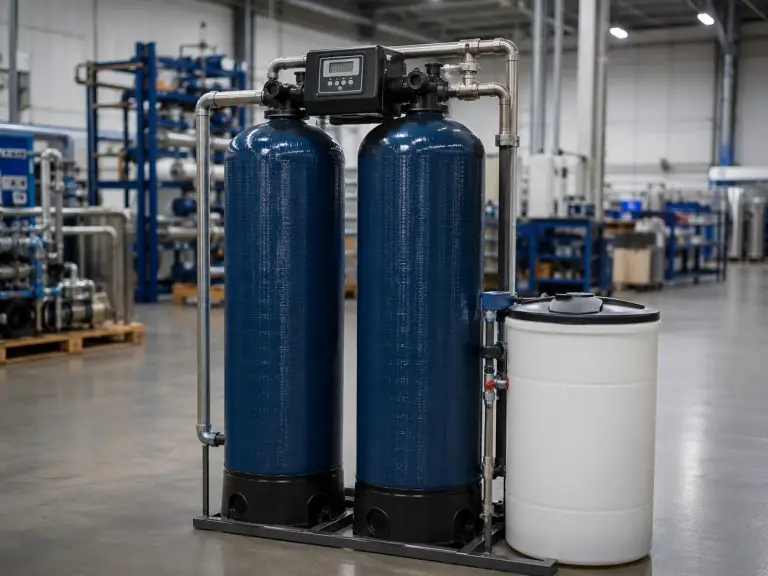
This is where Dual-tank water softeners may be worth considering. Depending on the system design, a dual-tank setup can provide additional flexibility by allowing one tank to operate while the other is involved in the regeneration process.
For homes where water use rarely slows down, that type of arrangement can be appealing.
Imagine a busy Saturday morning. Someone is showering upstairs, the dishwasher is running, a load of laundry has just started, and another family member is filling the kitchen sink. Water demand doesn’t always arrive politely one task at a time.
A system designed around continuous or higher-demand usage may offer practical advantages in situations like this. Still, it’s not automatically necessary for every household. A smaller family with predictable water use might find that a different configuration is perfectly adequate.
Again, matching the system to the household is more important than choosing the most elaborate option.
Small Homes Need Smart Solutions Too
Not every house has a spacious basement or a large utility room waiting for another piece of equipment.
In apartments, townhomes, smaller houses, or properties where every square foot matters, installation space can become one of the biggest factors in choosing a water treatment system.
Fortunately, Compact softeners for smaller spaces can provide an alternative for homeowners who want to address hard water without dedicating a large section of their home to equipment.
Compact doesn’t necessarily mean useless or underpowered. It simply means the design is intended to fit situations where available space is limited.
Before choosing a system, it’s worth measuring the installation area and considering practical access for maintenance. There’s little benefit in buying equipment that technically fits but leaves no room for servicing it later.
Plumbing access, drainage requirements, electrical needs where applicable, and clearance around the unit can all influence installation decisions.
These practical details aren’t glamorous, but ignoring them can create headaches.
Efficiency Is About More Than a Label
Water treatment technology has evolved, and many homeowners now pay close attention to how much water, salt, or energy a system may use during normal operation.
That interest has made High-efficiency models an attractive option for people who want to balance performance with ongoing operating costs.
Efficiency can mean different things depending on the system. Some units may be designed to regenerate based on actual water usage rather than following a fixed schedule. Others may use technology intended to reduce unnecessary consumption during operation.
The key is to look beyond a marketing label.
Ask how the system operates. What maintenance does it require? How often does regeneration occur? What ongoing supplies will be needed? A system that costs less initially may not always be the least expensive choice over several years.
On the other hand, paying extra for features you’ll never use doesn’t necessarily make financial sense either.
It’s all about finding the middle ground.
Think About the Long-Term Routine
Installing a water softener is usually a long-term decision. The equipment becomes part of the home’s infrastructure, quietly doing its job in the background.
Or at least, that’s how it should feel.
Before making a decision, think beyond installation day. Consider maintenance requirements, service availability, replacement parts, and the type of upkeep you’re comfortable handling.
Some homeowners don’t mind checking equipment regularly or adding supplies when needed. Others prefer a system that requires as little attention as possible.
Neither preference is wrong. It simply helps narrow the choices.
A good water treatment provider should be willing to explain the practical side of ownership without drowning you in technical language. You should understand what you’re buying, what it does, and what you’ll need to do to keep it working properly.
If the explanation requires a chart, a glossary, and three cups of coffee just to understand the basics, something may be getting overcomplicated.
Don’t Copy Your Neighbor’s Setup
Your neighbor may have the greatest water softener on the planet. They might love it. Their dishes sparkle, their laundry feels soft, and they haven’t complained about scale in years.
That’s great for them.
But their household may have a completely different number of residents, water usage patterns, plumbing layout, and water conditions. What works beautifully next door isn’t automatically the right answer for your home.
Water treatment decisions should begin with your own needs.
Look at your water. Think about your household size. Consider available installation space. Be honest about how much maintenance you’re willing to handle. And don’t be afraid to ask questions before spending money.
Better Water Should Make Life Easier
At the end of the day, a water softener isn’t something most people buy because they enjoy researching tanks, valves, and regeneration cycles.
They buy it because they want fewer mineral spots on dishes. Less buildup around faucets. Softer-feeling laundry. Easier cleaning. A more comfortable experience using water every day.
Those are simple goals, and the right system should support them without adding unnecessary complexity.
Whether your household needs a larger setup for continuous demand, a compact option for a tight installation space, or an efficient model designed to reduce unnecessary resource use, the best choice starts with understanding your situation.
There’s no universal “best water softener.” There’s only the one that makes the most sense for your home.
Take a little time to understand the water, compare the practical options, and think about how the system will fit into your everyday routine. A thoughtful decision upfront can save plenty of frustration later.
And once the right system is working quietly in the background, you may stop thinking about hard water altogether—which, honestly, is probably exactly what you wanted in the first place.
