Water is one of those things people tend to notice only when it isn’t convenient. A meeting starts, someone asks for a glass of water, and suddenly you’re looking around for a bottle. At home, the refrigerator is full, but somehow there’s no cold water ready to drink. In an office, employees keep disappearing to buy plastic bottles.
It sounds minor. Yet these little inconveniences add up.
Connected station How Multi-Stage Water Filtration Works to Improve Everyday Drinking Water
Having a dependable source of fresh, great-tasting water nearby can make staying hydrated much easier. The real question is which type of water dispenser makes sense for your home, office, shop, or commercial space. There are several options, and each has its own advantages.
Why Water Dispensers Still Make Sense
A water dispenser provides something surprisingly valuable: convenience.
Connected station Why Better Water Quality Can Make a Real Difference at Home
Instead of waiting for water to chill in the refrigerator or buying individual bottles, you have drinking water available when you need it. For workplaces, a dispenser can also create a simple hydration station employees and visitors can use throughout the day.
The best choice, however, depends on where the dispenser will be used, how many people will use it, and what kind of water source you have.
Connected station Choosing the Right Water Softener for Your Home and Lifestyle
Bottled Dispensers: Simple and Familiar
For many homes and smaller offices, Bottled Water Coolers / Dispensers remain a straightforward option.
Large water bottles are placed on the dispenser, and the unit provides cold water, room-temperature water, or sometimes hot water as well. There’s no complicated plumbing installation, which makes these systems particularly useful in rental properties, temporary offices, or locations where connecting directly to a water line isn’t practical.
Connected station What Your Water Leaves Behind Can Tell You a Lot
The downside is fairly obvious: somebody has to order, transport, store, and replace those heavy bottles.
There is also the issue of storage. A busy office can go through a surprising amount of water, and keeping several large containers around takes up valuable space.
Connected station Why Better Water Makes Everyday Home Life Feel Easier
Still, simplicity has its place. Sometimes you don’t need a complicated system—you just need water that works.
Bottleless Dispensers Offer a Different Approach
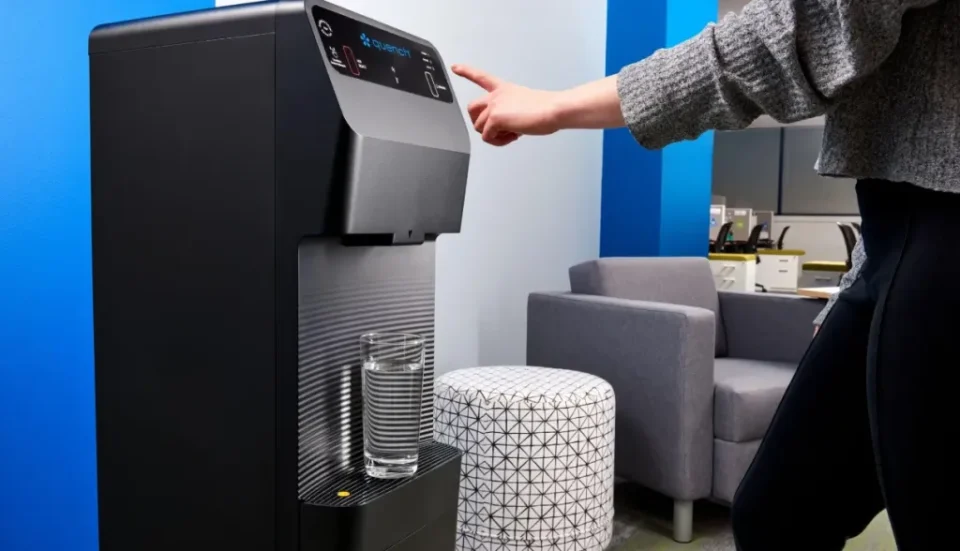
If constantly replacing bottles sounds like a chore, Bottleless Water Coolers / Dispensers may be worth considering.
These systems connect directly to an existing water line and use filtration to provide treated drinking water. Since the unit doesn’t rely on large delivery bottles, there’s less lifting, storage, and ongoing bottle handling.
For offices, this can be particularly convenient. Employees can refill reusable bottles throughout the day without someone having to remember whether the next water delivery has arrived.
Bottleless systems can also reduce dependence on disposable plastic containers, although their environmental benefits depend on factors such as filtration components, electricity consumption, maintenance, and the broader water-delivery setup.
Filtration Matters More Than the Cooler
A common mistake is to focus entirely on how a dispenser looks.
The cooling function is useful, sure, but the filtration technology is often more important. Different filters target different concerns, so it’s worth understanding what the system is actually designed to reduce.
Activated carbon, for example, is commonly used to improve taste and reduce chlorine. Sediment filtration can target particles. More advanced treatment technologies may address dissolved contaminants.
Before choosing a system, look at the manufacturer’s specifications and, where applicable, independent certifications. Don’t assume that every “filtered water” machine removes the same things.
When Reverse Osmosis Is Worth Considering
For households particularly concerned about dissolved substances in their water, Reverse Osmosis Systems / Drinking Water solutions can provide a more intensive treatment option.
Reverse osmosis uses a semipermeable membrane to reduce many dissolved substances from water. These systems are often installed at a kitchen sink or integrated into a dedicated drinking-water dispenser.
RO can be useful when water testing indicates a need for additional treatment. It can also improve taste for some households.
But there are trade-offs. RO systems generally require filter and membrane replacement, and they can produce wastewater during the filtration process. Storage capacity and installation space are also worth considering.
In other words, RO isn’t automatically better simply because it sounds more advanced. It should be matched to the water and the household’s needs.
Think About Your Water Source First
Before purchasing a dispenser, take a moment to consider where your water comes from.
Municipal water is treated before reaching your property, but its taste and mineral content can vary. Private well water is a different matter and may require more extensive testing.
A water test can identify characteristics such as hardness, pH, iron, chlorine, dissolved solids, and other potential concerns. Once you know what’s actually in the water, you can choose filtration technology with much greater confidence.
It’s a little less exciting than browsing product catalogs, admittedly, but it can save you from buying equipment that doesn’t solve your problem.
Don’t Forget Maintenance
Every water dispenser needs some maintenance.
Bottled units require regular bottle replacement and cleaning. Bottleless systems need filter changes according to the manufacturer’s schedule. RO systems require membrane and cartridge replacement.
A neglected dispenser can develop unpleasant tastes or odors, and filtration performance can decline when filters are left in service too long.
Ask about maintenance before buying. Find out the cost of replacement filters, how often they need to be changed, and whether professional servicing is available.
A good machine is only as useful as the care it receives.
Choosing for Home vs. Office
The right dispenser for a family kitchen may not be the right one for a 50-person office.
At home, convenience, size, appearance, and operating cost may be the biggest considerations. In an office, you also need to think about capacity, peak usage, durability, and ease of maintenance.
Restaurants, clinics, schools, gyms, and other commercial spaces have their own requirements. A dispenser that works beautifully for a small household could struggle under heavy daily use.
Look beyond the product itself and think about the environment in which it will operate.
Convenience Is the Real Benefit
At the end of the day, a water dispenser isn’t about having another appliance in the room. It’s about making good drinking habits easier.
When cold or filtered water is readily available, people are more likely to refill a reusable bottle instead of grabbing a sugary drink or running to the nearest shop.
Whether you choose a traditional bottled cooler, a bottleless unit, or a more advanced reverse osmosis setup, the important thing is to choose based on your actual water quality, usage, budget, and maintenance expectations.
The best system isn’t necessarily the fanciest one. It’s the one that quietly fits into your routine and keeps doing its job.
Because when clean, refreshing water is always within reach, staying hydrated stops feeling like another task on the to-do list. It just becomes part of the day.
