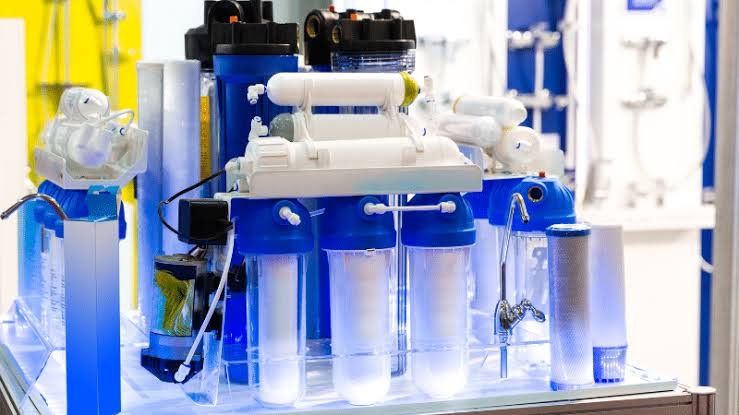
A glass of water seems simple enough. Turn on the tap, fill the glass, take a sip, and carry on with the day. Yet for many homeowners, that little glass can raise surprisingly big questions.
Why does the water taste different from one place to another? What causes that faint smell? Why does one filter seem to improve the taste while another barely makes a noticeable difference?
Connected station The Right Water Dispenser Can Make Everyday Hydration Simpler
The answer often comes down to what is actually happening inside the filtration system.
Modern water treatment is rarely about one filter doing all the work. Many systems use several stages, with each stage handling a different part of the process. Water moves through filters and treatment components in a carefully designed sequence, helping the system address particles, unwanted tastes, odors, and certain dissolved substances depending on the technology being used.
Connected station Why Better Water Quality Can Make a Real Difference at Home
It sounds technical, and sometimes it is. But the basic idea is actually pretty easy to understand once you break it down.
Why One Filter Is Not Always Enough
Different water problems require different solutions.
Connected station Choosing the Right Water Softener for Your Home and Lifestyle
Sediment such as sand, rust, dirt, or tiny particles may need to be captured before the water reaches more sensitive filtration components. Taste and odor concerns may require activated carbon. Dissolved substances can require a different treatment process altogether.
That’s why Three or four-stage water filtration systems are common in residential drinking water setups.
Connected station What Your Water Leaves Behind Can Tell You a Lot
Instead of expecting a single component to solve every possible issue, a multi-stage design divides the work. One stage may focus on physical particles, another on improving taste and odor, while a membrane or additional treatment stage handles other substances.
Think of it like cleaning a very dirty house. You wouldn’t use the same tool for every job. A vacuum, mop, dust cloth, and cleaning solution all have different purposes. Water treatment works in a similar way.
Connected station Why Better Water Makes Everyday Home Life Feel Easier
Each stage has a role, and the overall result depends on how well those stages work together.
The First Line of Defense
In many systems, the filtration process begins with a sediment filter.
This stage is designed to capture larger particles that may be present in the water. Depending on the source, these particles can include rust from aging pipes, sand, silt, or other suspended material.
Removing these particles early can help protect the later stages of the system.
That protection matters because more advanced filters and membranes can lose effectiveness or become clogged more quickly if they are constantly exposed to sediment. In other words, the first filter often does some of the unglamorous work that helps everything else perform properly.
You may not see the sediment filter doing its job every day, but over time, it can make a real difference to the overall operation of the system.
Carbon Filtration and the Difference in Taste
Activated carbon is widely used in water filtration because of its ability to reduce certain compounds that affect taste and odor.
For households using municipal water, chlorine-related taste or smell can be a common complaint. A carbon filter may help improve the overall drinking experience by reducing some of these unwanted characteristics.
This is often the point where homeowners notice the difference.
Water that previously had a strong taste may feel more pleasant to drink. Coffee and tea can taste different. Even something as ordinary as filling a glass before bed can become more enjoyable when the water no longer carries a flavor you dislike.
Of course, not every taste issue comes from the same source. Water quality varies, and carbon filtration has specific capabilities and limitations. That’s why understanding the source water remains important.
A good filtration system should be chosen for the water you actually have, not just because the packaging promises everything under the sun.
The Role of the Membrane
One of the most important components in many advanced drinking water systems is the membrane.
A reverse osmosis membrane works differently from a basic sediment or carbon filter. It uses pressure to move water through a specialized barrier while helping reduce many dissolved substances.
In simple terms, Semi-permeable membranes to reject solids form the heart of this process. The membrane allows water to pass through while rejecting many substances that are larger or otherwise unable to move through as easily.
This separation process can help reduce a variety of dissolved materials, depending on the membrane and the conditions of the incoming water.
It’s worth remembering that the membrane is only one part of the overall system. Its performance can depend heavily on the condition of the water before it reaches the membrane. Excess sediment or chlorine, for example, can create problems if the system does not have appropriate pre-treatment.
That’s one reason multi-stage systems are designed as a sequence rather than a collection of random filters.
Why Pre-Filters and Post-Filters Matter
The stages before and after the main treatment component can be just as important as the component itself.
Specially formulated pre-and post-filters are designed to support the filtration process from both directions.
Pre-filters prepare the incoming water before it reaches more sensitive components. Depending on the system, they may reduce sediment, chlorine, or other substances that could affect performance.
Post-filters, meanwhile, provide an additional stage of treatment after the primary filtration process. In many drinking water systems, this final stage can help polish the water and improve its taste before it reaches the faucet.
It’s a little like preparing ingredients before cooking and then adding the finishing touches before serving a meal. The main cooking step matters, obviously, but preparation and finishing can have a big effect on the final result.
The same principle applies to water filtration.
Maintenance Is What Keeps the System Working
Even a well-designed filtration system needs regular care.
Filters have a limited capacity. Over time, they collect material and gradually become less effective. A membrane may also need replacement after a certain period, depending on water conditions and household usage.
Ignoring maintenance can lead to reduced water flow, poorer performance, and unnecessary stress on the equipment.
Fortunately, maintenance is usually straightforward when homeowners follow the recommended schedule. Some systems have filters that can be replaced easily, while others may require professional servicing.
Before choosing a system, it’s wise to ask how often each filter needs to be changed and what replacement costs are likely to be. The purchase price is only part of the story. Long-term maintenance is part of owning any water treatment equipment.
A slightly more expensive system with easily available replacement filters may sometimes be a better choice than a cheaper unit with difficult or costly maintenance.
Testing Helps You Choose the Right System
Water filtration works best when the system matches the problem.
If you don’t know what is affecting your water, buying equipment can become a guessing game. You might choose a system with features you don’t need while overlooking the issue you actually have.
Water testing can help identify characteristics such as hardness, pH, sediment, or other substances depending on the type of test performed. Homes using private wells may especially benefit from periodic testing because water conditions can change over time.
Municipal water users may also want to understand local water quality and any specific concerns they have about taste, odor, or household plumbing.
The goal isn’t to become obsessed with every number on a water report. It’s simply to have enough information to make a sensible decision.
A Better Drinking Experience Is Often About the Details
The best water filtration systems don’t necessarily need to be the biggest or most complicated ones.
What matters is whether the system addresses the actual needs of the household. For some homes, a simple carbon filter may be enough. Others may benefit from a multi-stage setup that includes sediment filtration, carbon treatment, membrane technology, and a final polishing stage.
There is no universal answer, and that’s okay.
The smartest approach is to understand your water, consider how your household uses it, and choose a system with the right combination of filtration technologies.
In the end, multi-stage water treatment is really about teamwork. Each component handles a particular part of the process, helping the next stage do its job more effectively.
When those stages are properly selected and maintained, the result can be a noticeable improvement in the everyday water experience. Better-tasting coffee, a more enjoyable glass of water, and fewer reasons to keep stacks of bottled water around the house.
Sometimes the biggest improvements really do come from a series of small steps working together.
